How do you maintain bumper cars? - Bumper Car Encyclopedia
Date: 2026-07-06
I. General Safety Prerequisites Before Maintenance
Battery-powered bumper cars: Disconnect the main positive battery terminal first to prevent short circuits and controller damage during inspection.
Ceiling-grid/Floor-grid bumper cars: Turn off the main power switch for the arena and wait 10 minutes for the transformer capacitors to discharge before handling conductive components.
Do not perform electrical maintenance in damp or water-logged environments; wipe the vehicle dry before inspecting the wiring.
Safety belts, emergency stop buttons, and rubber bumpers are critical safety components; they must be repaired before the vehicle can be operated.
II. Maintenance for Battery-Powered Bumper Cars (Children's Electric Bumper Cars)
(A) Daily Pre-opening and Post-operation Maintenance (Mandatory)
Inspection of exterior safety components
Check the peripheral rubber bumper; promptly re-glue any cracks, loose sections, or gaps. Test the safety belt buckle to ensure it springs back automatically and is free of fractures. Immediately tighten any loose screws securing the seat or armrests.
Inspection of movement and steering
Manually rotate the four wheels to ensure there is no binding or lateral wobbling. Ensure the steering wheel turns smoothly without friction-related noise. Check that the accelerator and brake pedals spring back automatically upon release and do not get stuck.
Basic inspection of battery and electrical circuits
Turn on the power with the key and test the lights, music, and horn. Measure voltage with a multimeter: if a 12V vehicle reads below 11.5V or a 24V vehicle reads below 23V, the battery must be fully charged. Inspect battery terminals and promptly clean off any white oxidation powder.
Simple cleaning
Wipe mud and sand from the chassis and remove debris from the tires to prevent abrasion of bearings and wire harness insulation.
(B) Weekly Maintenance
Mechanical lubrication
Apply high-temperature lithium-based grease to the four wheel bearings, steering shaft, and steering linkage. For belt-driven models, check the belt for cracks or looseness; tighten the pulley if the belt is too slack. For gear-driven models, check the gearbox for oil leaks.
Motor dust removal
Use a dry air compressor to blow out accumulated carbon dust from the motor and carbon brush housing; excessive carbon buildup can cause reduced power, overheating, and sparking. Wiring and Connections
Inspect all connectors for the controller, foot pedal switch, and music/light board; sand down or replace any connectors that are loose, charred, or oxidized. Check the entire vehicle's wiring harness for cracked insulation.
Remote Control Function Test
Test remote startup, speed adjustment, and emergency stop functions; replace the remote's button cell battery promptly if power is low.
 (III) Monthly In-Depth Maintenance
Drivetrain Inspection and Service
Replace drive belts immediately if they show signs of aging or fine cracks; drain and clean the gearbox, then refill with fresh gear oil; inspect gears for wear or broken teeth.
Motor Carbon Brush Replacement
Replace carbon brushes immediately if their remaining length is less than half of the original; after replacement, manually rotate the motor for 5 minutes to break them in.
Battery Maintenance
For lead-acid batteries, top up with distilled water to the standard level; measure the voltage of each battery—a voltage difference exceeding 0.5V between units indicates aging, so replace the faulty battery individually; clean oxidation from battery terminals and apply Vaseline to prevent corrosion.
Brake System Maintenance
Remove and inspect brake friction pads; replace them immediately if worn thin; adjust the brake linkage clearance to ensure responsive braking and no drag upon release; replace any broken brake return springs.
Chassis Rust Prevention
Wipe the chassis clean of water, mud, and debris; sand down rusted areas and apply anti-rust paint.
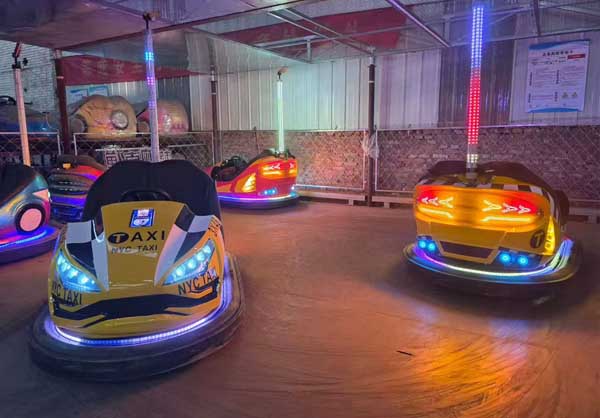 (IV) Quarterly / Annual Major Overhaul
Replace all aging wiring harnesses across the vehicle to eliminate the risk of short circuits or spontaneous combustion;
Test the insulation performance of the controller and motor; replace immediately if there are signs of severe overheating or electrical leakage;
Bulk replacement of all wear-and-tear parts: drive wheels, bearings, foot pedal switches, protective bumper strips, and seatbelts. (V) Maintenance for Long-Term Storage (Off-Season)
Fully charge the battery and disconnect the main power cable; recharge every 15 days to prevent sulfation and battery failure;
Clean the entire vehicle and apply rubber protectant to tires and rubber bumpers to delay aging and cracking;
Apply grease to all bearings and pivot points, and spray anti-rust oil on the chassis;
Store in a dry indoor area and cover with a waterproof tarp to protect against sun and rain;
Before resuming operations: perform a full power-up and test run, replace worn carbon brushes and drive belts, and re-check battery voltage.
III. Maintenance for Overhead/Floor-Grid Bumper Cars (Large Indoor Playground Models)
(I) Daily Maintenance
Conductive System Cleaning (Critical)
Clean the carbon brushes on the roof-mounted conductive pole and remove oil/dust from the bottom conductive wheels; replace carbon brushes early if worn down; sweep the conductive steel floor plates and remove wire scraps or metal debris to prevent short circuits and power trips.
Vehicle Function Check
Test the red emergency stop button: pressing it should immediately cut power, and resetting it should restore power; check the condition of the rubber bumpers and seat mountings.
Venue Power Distribution Check
Inspect the main power distribution cabinet for overheating or abnormal noises at the circuit breakers, and ensure wiring terminals show no signs of scorching.
(II) Weekly Maintenance
Apply grease to wheel bearings and steering mechanisms; tighten chassis and motor mounting bolts;
Sand down the oxidation layer on the contact surfaces of conductive wheels and floor plates to ensure smooth conductivity and prevent intermittent vehicle movement;
Clean dust from inside the power distribution cabinet and transformer; tighten all wiring terminals.
(III) Monthly Maintenance
Disassemble the motor to replace worn carbon brushes and clean carbon deposits from the rotor;
Check drive wheel wear; promptly clean oil stains from the floor to prevent slipping and power loss;
Inspect all vehicle wiring; wrap damaged wire insulation or replace the wiring harness entirely;
Remove rust from conductive floor plates and apply specialized conductive anti-rust paint; tighten all floor mounting screws.
(IV) Quarterly Major Overhaul
Perform voltage and insulation tests on transformers and control cabinets;
Replace aged conductive carbon brushes, conductive wheels, and worn drivetrain components;
Inspect the venue's grounding system and eliminate any potential electrical leakage hazards.
IV. General Maintenance Precautions (Key to Extending Bumper Car Lifespan)
Do not use standard engine oil for lubrication, as it tends to run off and attract dust; lithium-based grease must be used instead.
Change the gear oil every six months; failure to do so over a long period leads to sludge formation, causing gear wear and abnormal noise.
Do not store the battery in a discharged state; a single instance of deep discharge can significantly shorten its lifespan.
Do not repair damaged wire insulation with ordinary tape; use high-voltage insulating tape, or replace the wiring harness entirely if the damage is severe.
Avoid overloading during operation; excess weight accelerates wear on tires, bearings, and the motor.
After operating in rainy weather, clean accumulated mud and sand from the chassis to prevent rust and electrical leakage.
Guangsh Amusement is a professional bumper car manufacturer,Please contact us if you would like to learn more about the maintenance of bumper cars amusement park rides.